
Biography
Rabbi Eliyahu ben Shlomo Zalman, the Vilna Gaon or Gra, was born on 15 Nisan 5480 (23 April 1720) in Selets, near Brest-Litovsk, in today's Belarus. His father was Rabbi Shlomo Zalman and his mother Treina; through his great-grandfather Rabbi Eliyahu Chassid, after whom he was named, he descended from Rabbi Moshe Kramer, rabbi of Vilna.
As a child of six he delivered a derashah in the Great Synagogue of Vilna. He later spent a few months in Keidan, studying with Rabbi David Katzenellenbogen and Rabbi Moshe Margalit, author of Pnei Moshe. He married Chana, daughter of Yehuda Leib of Keidan, and after her death Gittel. Around the age of twenty he travelled through Poland and Germany, returning to Vilna in 1745.
He refused any official rabbinic post; the Vilna community paid him a stipend so that he could devote himself to study. According to his sons, he slept only two hours a day, in half-hour periods. His knowledge spanned Scripture, Talmud, halakhah and Kabbalah, as well as mathematics and astronomy, and he favoured study according to the plain meaning (peshat). He led the opposition to Chasidism, which was placed under ban in 1777 and again in 1781. He himself set out for the Land of Israel but turned back after reaching Königsberg.
From 1767 he taught in a study hall next to his home. His foremost disciple, Rabbi Chaim of Volozhin, founded the Volozhin yeshiva and wrote Nefesh HaChaim; other students, led by Rabbi Menachem Mendel of Shklov, settled from 1808 in Safed and later in Jerusalem, where they re-established the Ashkenazi community. Works: the Biur HaGra on the Shulchan Aruch, and commentaries on the Tanakh, the Mishnah orders Zeraim and Taharot, the Jerusalem Talmud, the Tosefta and the Sifra, as well as on the Zohar, Sifra DiTzniuta and Sefer Yetzirah.
He passed away on 19 Tishrei 5558 (9 October 1797) in Vilna, during the days of Sukkot, and was buried there beside Avraham ben Avraham.
Books & writings
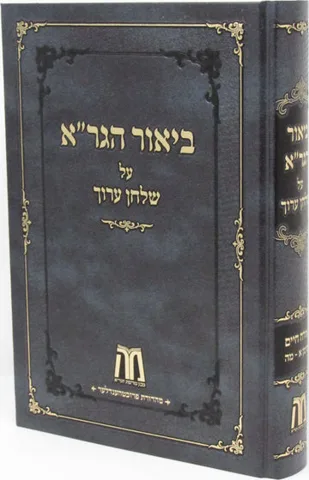
Biur HaGra
ביאור הגר"א
The Vilna Gaon's commentary on the Shulchan Aruch.
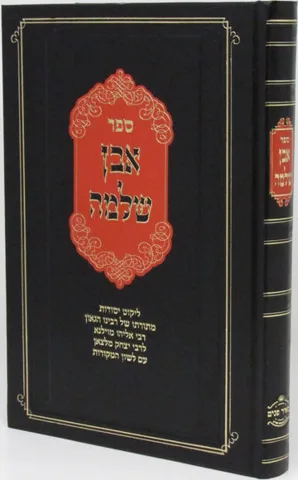
Even Shleimah
אבן שלמה
Ethical teachings of the Vilna Gaon.