
Biography
Rabbi Shlomo Yitzchaki, known by the acronym Rashi, was born in Troyes, in Champagne, around 4800 (1040). An only child, son of Rabbi Yitzchak, he had as his maternal uncle Rabbi Shimon, a sage of Mainz who had studied under Rabbeinu Gershom. He was called "Parshandata", the interpreter of the Law.
After marrying young, he went to study in the great yeshivot of the Rhineland. His principal teacher was Rabbi Yaakov ben Yakar, of whom he wrote that his heart and understanding came from his mouth; he then studied with Rabbi Yitzchak ben Yehuda in Mainz and with Rabbi Yitzchak HaLevi in Worms, all of them disciples of Rabbeinu Gershom.
Returning to Troyes at about twenty-five, he joined the local rabbinical court, later becoming its head, and answered a great many halachic questions. Around 1070 he founded a yeshiva that drew many students. Tradition holds that he was a vintner, though historians regard this as a hypothesis. After the massacres of the 1096 crusade in the Rhineland he composed penitential Selichot mourning the victims.
His commentary covers most of the Bible and nearly the entire Babylonian Talmud. His commentary on the Chumash was the first dated Hebrew printed book (Reggio di Calabria, 1475), and his Talmud commentary has appeared in every edition since Daniel Bomberg's in the 1520s. More than three hundred supercommentaries have been written on it.
He had three daughters, Yocheved, Miriam and Rachel. Yocheved married Rabbi Meir ben Shmuel; their sons, the Rashbam, the Rivam and Rabbeinu Tam, were among the leading Tosafists.
Rashi passed away on 29 Tammuz 4865 (13 July 1105) and was buried in Troyes. The location of the cemetery was forgotten over time; a monument by the sculptor Raymond Moretti now stands in the square that covers it.
Books & writings
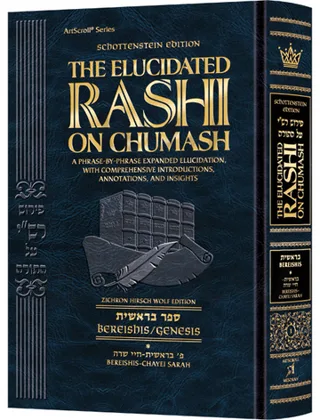
Rashi on the Torah
פירוש רש"י
The fundamental commentary on Torah and Talmud.