
Biography
Rabbi Yaakov ben Asher, known as the Baal HaTurim, the Tur or the Rivah, was born in Germany around 5029 (1269), most likely in Cologne. The third son of Rabbeinu Asher ben Yechiel, the Rosh, he had his father as his principal teacher; his two elder brothers, Rabbi Yechiel and Rabbi Shlomo Chassid, died young.
In the early fourteenth century he followed his father to Spain, where the Rosh became rabbi of Toledo. Despite his greatness in Torah, he declined to serve as a rabbi and lived in poverty, as he himself testifies in Tur Orach Chaim (siman 242), writing that he has a little of his own which is not enough for him and that he needs others. It was his brother Rabbi Yehudah who succeeded their father as rabbi of Toledo.
His major work, the Arbaah Turim ("Four Rows"), published around 5100 (1340), arranges halachah in four sections: Orach Chaim (daily life, prayer, Shabbat and festivals), Yoreh Deah (dietary laws, ritual slaughter, Torah study), Even HaEzer (marriage and divorce) and Choshen Mishpat (civil law, judges and testimony). Rabbi Yosef Karo's Shulchan Aruch, written some two centuries later, took up its material while correcting and abridging its language.
He also wrote a commentary on the Torah; his notes on gematria and the Masorah, linked to the words of the Sages, are printed in the Mikraot Gedolot and in most editions of the Chumash under the title Baal HaTurim. He also compiled an abridgment of his father's rulings, the Kitzur Piskei HaRosh.
He passed away on 12 Tammuz, no earlier than 5103 (1343) and no later than 5108 (1348), and was buried in Toledo, where the inscription on his tombstone was copied by a fifteenth-century traveler. A tradition, recorded among others by the Chida in Shem HaGedolim, holds that he died and was buried on the island of Chios while on his way to the Land of Israel.
Books & writings
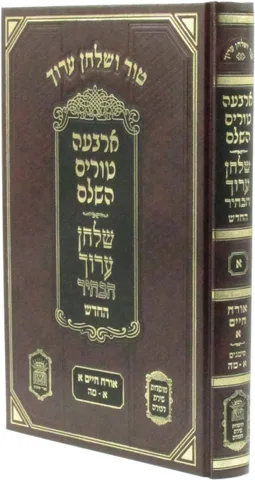
Arba'ah Turim
ארבעה טורים
The four-part code of law.
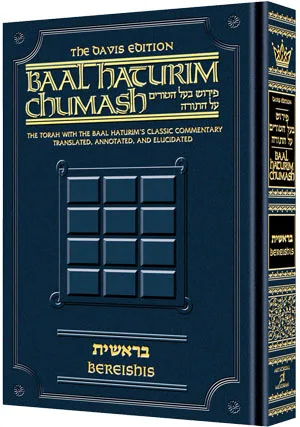
Baal HaTurim on the Torah
בעל הטורים על התורה
Allusions and gematria on the Torah.
Contacts & practical information
Office de Tourisme de Tolède
Toledo, the "Sephardic Jerusalem". The medieval Jewish cemetery has no officially identified location. The Sephardic Museum (El Tránsito Synagogue) can orient visitors.