
Biography
Rabbi Shimon bar Yochai, known as Rashbi, was a fourth-generation Tanna who lived in the Land of Israel in the 2nd century, under Roman rule. His year of birth is unknown. In his youth he was among the sages gathered at Yavneh.
He was a disciple of Rabbi Akiva, under whom he studied for thirteen years in Bnei Brak, and he continued to seek his master's teaching even after Rabbi Akiva was imprisoned by the Romans. He was one of the five students through whom Rabbi Akiva rebuilt Torah learning after most of his disciples had died, and Rabbi Yehuda ben Bava secretly gave him semikhah.
According to the Babylonian Talmud (Shabbat 33b), he openly criticized the works of the Romans, was sentenced to death and had to hide with his son Rabbi Elazar in a cave. Sustained by a carob tree and a spring that appeared miraculously, they studied Torah there for twelve years, followed by a thirteenth year. A later tradition, from the 16th century, places the cave in Peki'in.
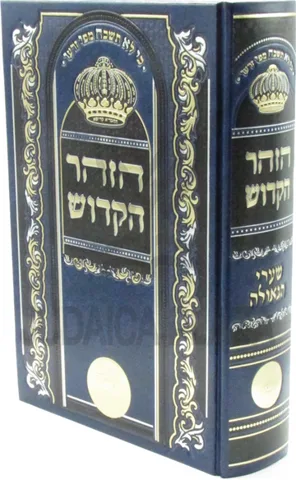
He later taught in his study hall at Tekoa in the Galilee, where Rabbi Yehuda HaNasi was among his students. His halakhic rulings appear in almost every tractate of the Talmud, and the Sifrei and the Mekhilta de-Rabbi Shimon are associated with his school. Tradition attributes to him the Zohar, which calls him Botzina Kadisha, "the holy lamp", and in which most teachings are given in his name and in the names of his disciples.
The year of his death is unknown. Tradition places his hillula on Lag BaOmer, 18 Iyar, the day on which, according to the Zohar, he revealed the secrets of Kabbalah to his disciples before passing away. He is buried in Meron, where hundreds of thousands gather every year on that day, singing among other songs the piyyut "Bar Yochai" composed by Rabbi Shimon Lavi.
Books & writings
Contacts & practical information
Chevrat Rashbi - Ohel Rabbi Shimon bar Yochai
Open access 24/7 year-round. Peak attendance on Lag BaOmer. Separate sections for men and women.