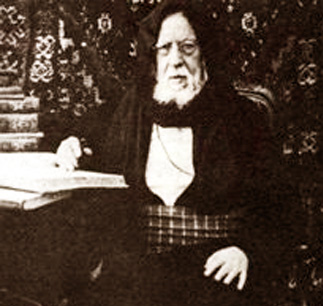
Biography
Rabbi Raphael Encaoua (also Ankawa) was born in Salé, Morocco, on 2 Tevet 5608 (9 December 1847). He was the son of Rabbi Mordechai and of Biyada, daughter of Rabbi Raphael Bibas, and came from a long Sephardic rabbinic line that included Rabbi Ephraim Encaoua, a rabbi, physician and philosopher of the generation of the expulsion from Spain.
Diligent in study from his youth, he combined learning with commerce. He studied under Rabbi Yissachar Assaraf, whose daughter he married. When his teacher moved to the Land of Israel in 1879, he was appointed dayan of the rabbinical court of Salé, which he went on to head. Around 5660 (1900) he founded a yeshiva in Salé; his students included Rabbi David Tsabah, Rabbi Avraham David Rivah, Rabbi Ephraim Shalom Encaoua and his own son, Rabbi Michael Yissachar Encaoua.
At the start of the French Protectorate, established in 1912, the authorities decided to create the office of Chief Rabbi to represent Moroccan Jewry. When he was proposed, he at first humbly refused, insisting that there were greater rabbis than he in Morocco, among them Rabbi Ben Danan, dayan of Fez. He eventually accepted, and in 1918 became the first Chief Rabbi of Morocco and the first President of the High Rabbinical Court in Rabat. In 1929 the French government awarded him the Legion of Honour.
Works: Karnei Re'em (Jerusalem, 1910), Pa'amonei Zahav (Jerusalem, 1912), To'afot Re'em (Casablanca, 1930) and Chiddushei Re'em, along with volumes published after his death.
He passed away in Salé on 4 Av 5695 (3 August 1935), aged 87. According to the press of the time, up to 50,000 people attended his funeral, including French and Muslim dignitaries and Jewish delegations from all over Morocco. He is buried in the Jewish cemetery of Salé, where his grave became a place of pilgrimage. His son, Rabbi Michael Yissachar Encaoua, later also served as Chief Rabbi of Morocco.