Biography
Rabbi Nathan Nata Shapira, known as the Megaleh Amukot after his book, was born around 5345 (1584 or 1585). He was the son of Rabbi Shlomo Shapira and was named after his grandfather, Rabbi Nathan Nata Shapira, rabbi of Grodno and author of Mevo Shearim and Imrei Shefer. His family traced its lineage to Rashi.
Around 1608 he moved from Grodno to Kazimierz, near Krakow, and married Roza, daughter of Moshe Yaakobowicz, a communal leader. As his father-in-law provided for all his needs, he served the community without pay. In 5377 (1617), at the age of thirty-one, he was appointed rosh yeshiva and preacher of the Krakow community; English and French sources describe him as chief rabbi of the city.
He taught Talmud to his students by the method of pilpul, while his Shabbat sermons also drew on kabbalah, building interpretations upon every letter and crown of the Torah. He played an important role in spreading the teachings of the Arizal in Poland. He adopted the Safed custom of Tikkun Chatzot and wept each night over the destruction of the Temple. His greatest student was Rabbi Shabbatai HaKohen, the Shach.
He wrote some fifteen works, among them a commentary on the Zohar printed in his lifetime in Lublin, glosses on the Rif, and the Megaleh Amukot on the Torah. The Megaleh Amukot on Vaetchanan, printed in Krakow in 5397 (1637), offers 252 explanations of Moshe's prayer “Let me cross over.”
He passed away on 13 Av 5393 (20 July 1633) and was buried in the Old Jewish Cemetery of Krakow (the Remah cemetery), where his wife and daughter also rest. His epitaph states that the prophet Eliyahu spoke with him face to face.
Books & writings
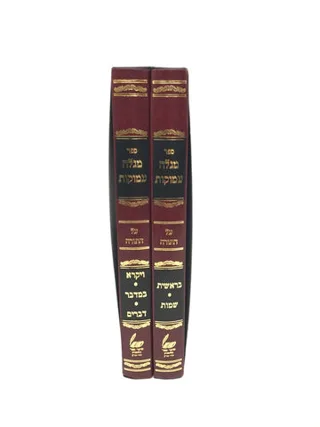
Megaleh Amukot
מגלה עמוקות
252 explanations of Moshe's prayer.
Contacts & practical information
Cimetière juif de Miodowa - Cracovie (Remuh Synagogue)
Remuh Cemetery is one of the oldest Jewish cemeteries in Poland. Paid admission. Open Sun-Fri.