
Biography
Rabbi Moshe ben Nachman, the Ramban or Nachmanides, known in Catalan as Bonastruc ça Porta, was born around 4954 (1194) in Girona, Catalonia, then part of the Crown of Aragon, where he grew up, studied and lived most of his life. He was a cousin of Rabbeinu Yonah of Girona.
He studied Talmud with Rabbi Yehudah bar Yakar, a disciple of the Ritzba, through whom he received the teachings of the Tosafists, and with Rabbi Natan ben Meir, who carried the tradition of Provence. A physician by profession, he was at once a halachic authority, a commentator on the Bible and the Talmud, a Kabbalist, a poet and a thinker. His students included the Rashba and the Ra'ah.
During the controversy over the writings of the Rambam, he wrote letters seeking to reconcile the two sides and asked the sages of France to lift their ban. In 1263 King James I of Aragon compelled him to take part in a public disputation in Barcelona against the convert Pablo Christiani; he defended the Jewish faith with unusual freedom of speech, and the king sent him off with a gift. A few years later, under pressure from Pope Clement IV, he had to flee Spain and went up to the Land of Israel in 1267.
He found Jerusalem desolate, organized a community there and built a synagogue; he also visited Hebron and then settled in Acre, where he delivered his Rosh Hashanah sermon around 1269. He is regarded as a key figure in re-establishing the Jewish community of Jerusalem after the Crusades.
Works: a commentary on the Torah combining plain meaning, reflection and Kabbalistic allusions; novellae on the Talmud; Torat HaAdam; critical glosses on the Rambam's Sefer HaMitzvot; Milchamot Hashem, in defense of the Rif; sermons and letters, including the famous letter to his son Nachman.
He passed away in the Land of Israel around 1270, on 11 Nissan according to tradition. His burial place is uncertain: various traditions place it in Haifa at the foot of Mount Carmel (the earliest), in Acre, in Hebron or in Jerusalem.
Books & writings
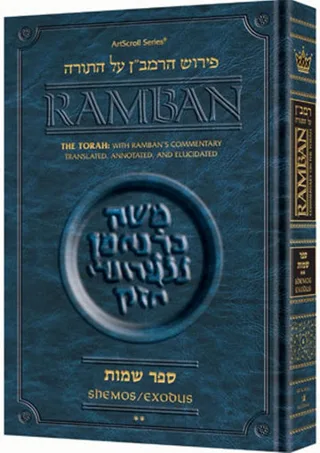
Ramban on the Torah
פירוש הרמב"ן על התורה
Torah commentary combining plain meaning and Kabbalah.