Biography
Rabbi Yitzchak Chai Taieb, known as Rabbi Chai Taieb "Lo Met", was born in Tunis around 5504 (1743). He is among the most revered rabbis of Tunisian Jewry. He was called Chai to distinguish him from his relative Rabbi Yitzchak Taieb, author of Erech HaShulchan.
Already in his youth he was admired and gathered many students around him. Renowned for his deep knowledge of the Talmud, he was even more famous for his mastery of Kabbalah. He lived in poverty, supported by the gifts of those who recognized his greatness, and despite his learning and his many admirers he never held any official rabbinic post.
Humble and discreet, he was regarded as a wonder-worker: he was credited with bringing rain, obtaining children for barren women and reading thoughts. A well-known story tells that during a drought, when the rabbis had proclaimed a fast, he stepped out of his house and spoke to G-d like a son to his father, and abundant rain immediately began to fall.
Works: most of his writings were lost. About sixty years after his death, Chelev Chitim was published in Tunis, collecting part of his novellae on the Talmud; its title is an acronym of "Chacham Yitzchak Chai Taieb Besiluko Lo Met" ("the sage Yitzchak Chai Taieb did not die at his passing").
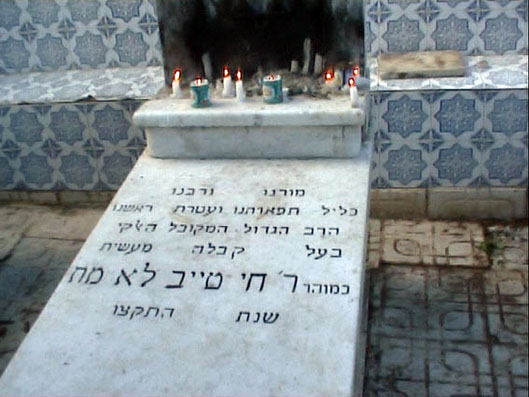
He passed away on 16 Iyar 5597 (May 21, 1837). According to tradition, his tombstone read "died on 16 Iyar"; the Rav appeared in a dream to the engraver and asked him to erase the word "met" (died), and the engraver, unable to remove it, added the word "lo" ("not") above it, hence his nickname. His remains were moved from the old Jewish cemetery of Tunis to the Borgel cemetery. Tunisian tradition celebrates his hillula on 19 Kislev, while some hold it on 16 Iyar, the date on his tombstone. Many synagogues and streets in Israel bear his name.